
AI Infrastructure for Financial Services: Low-Latency Tra…
Quick Summary
- Trading: FPGA + GPU hybrid for sub-microsecond latency
- Risk: Monte Carlo simulations scale well on GPU clusters
- Fraud: Real-time inference on L40S or L4 for transaction scoring
- Compliance: FINRA and SEC regulations require audit trails
- Deployment: Co-location in NY/NJ data centers for exchange proximity
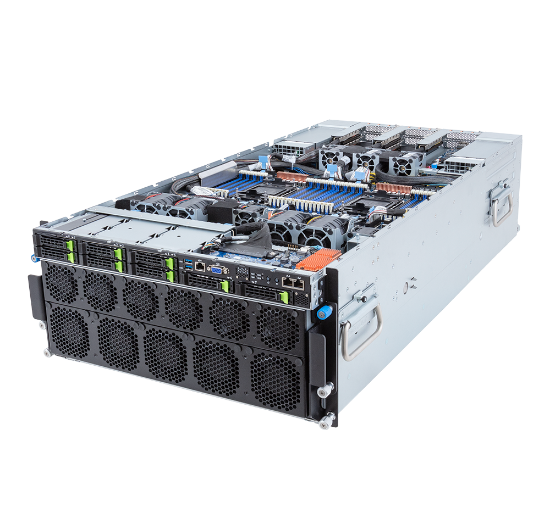
AI Infrastructure for Financial Services GPU compute server
Financial services firms deploy AI infrastructure for applications spanning algorithmic trading, risk management, fraud detection, customer service, and regulatory compliance. Each application has distinct infrastructure requirements, with latency sensitivity being the most critical differentiator. This guide addresses the specialized infrastructure needs of financial AI deployments.
Trading Infrastructure Requirements
Algorithmic trading AI systems require the lowest possible latency, often measured in microseconds. GPU inference for trading models must be co-located with exchange matching engines in proximity data centers (NY/NJ for US equities, IL for futures, London for European markets). FPGA + GPU hybrid architectures are common, with FPGAs handling pre-trade risk checks while GPUs compute model predictions.
Risk Analysis GPU Workloads
Risk analysis—including Monte Carlo simulations, VaR calculations, and stress testing—scales effectively on GPU clusters. A single H100 GPU performs Monte Carlo risk simulations approximately 80x faster than a CPU core, enabling intraday risk analysis that previously required overnight batch processing. Financial institutions typically deploy 4-32 GPU servers for risk analytics.
Fraud Detection Architecture
Real-time fraud detection requires inference latency under 50ms for transaction scoring. L4 GPUs, with their low power consumption and dense form factor, are ideal for high-throughput fraud detection inference. A single L4 can score 10,000+ transactions per second with sub-millisecond model inference time. For more complex fraud models, L40S provides additional capacity.
Related Content
Explore more about this topic:
Frequently Asked QuestionsWhat compliance requirements affect financial AI infrastructure?
FINRA, SEC, and MiFID II regulations require audit trails for all AI-driven trading decisions. Model validation and governance frameworks require separate development, testing, and production environments with rigorous change control.
Are financial AI systems different from general AI infrastructure?
Financial AI infrastructure prioritizes deterministic latency, regulatory compliance, and business continuity over raw throughput. Data center proximity to exchanges, redundant network paths, and comprehensive monitoring are more critical than maximum GPU utilization.