
AI Hardware Lifecycle Management: Refresh Cycles and Disp…
Quick Summary
- GPU Refresh: Every 2-3 years for training, 3-4 years for inference
- Total Lifecycle: 5-7 years from procurement to disposal
- Cascade Strategy: Training→Inference→Dev→Batch processing
- Secure Disposal: NIST SP 800-88 sanitization required
- Cost: Refresh planning reduces TCO by 15-25%
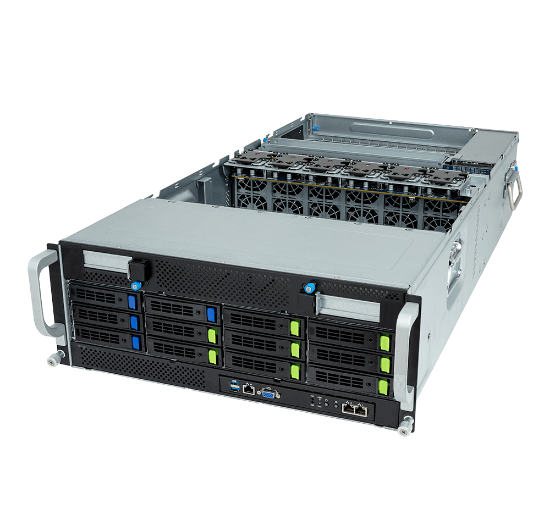
AI Hardware Lifecycle Enterprise GPU server Management
AI hardware lifecycle management encompasses the planning, procurement, deployment, operation, refresh, and secure disposal of GPU infrastructure. With GPU server costs ranging from $100K to $2M+ per system and technology refresh cycles accelerating, effective lifecycle management is essential for optimizing total cost of ownership and maintaining competitive AI capabilities.
GPU Refresh Cycles
NVIDIA GPU architectures follow approximately 2-year cadences: Ampere (2020), Hopper (2022), Blackwell (2024), and the next-generation Rubin (expected 2026). Mid-cycle memory enhancements (H100→H200) extend useful life but cannot match full architectural improvements. Enterprise AI organizations typically refresh training infrastructure every 2-3 years and inference infrastructure every 3-4 years, cascading older GPUs to less demanding workloads.
| Phase | Duration | Key Activities |
|---|---|---|
| Planning | 3-6 months | Technology assessment, capacity planning, budget preparation |
| Procurement | 2-6 months | GSA/SEWP/ITES-4H requisition, vendor selection, contracting |
| Deployment | 1-3 months | Installation, configuration, benchmark validation |
| Operation | 24-48 months | Monitoring, maintenance, upgrades, capacity management |
| Refresh | 1-3 months | Data migration, decommissioning, secure disposal |
Secure Disposal Requirements
GPU servers contain sensitive data including model weights, training data, and encryption keys. Secure disposal requires NIST SP 800-88 compliant media sanitization. For classified environments, physical destruction (shredding, pulverizing) of storage media and GPU boards is required. NTS provides certified disposal services meeting federal data destruction standards.
Related Content
Explore more about this topic:
- Best GPU Configuration for GPT-4 Fine-Tuning
- AI Infrastructure TCO: Budgeting Guide
- AI Model Serving Architecture
When should AI hardware be replaced?
AI training GPUs should typically be refreshed every 2-3 GPU generations (3-4 years) when new architectures offer 2-4x performance improvement. Inference GPUs can remain in service 4-5 years. The replacement decision should be driven by total cost per training run or inference query, not hardware age alone.
Can old GPUs be repurposed within the organization?
Yes. Cascade older GPUs to less demanding workloads: training GPUs become inference GPUs, inference GPUs become development/test GPUs, and development GPUs support batch processing or non-AI HPC workloads. This cascade strategy extends useful life and improves overall ROI.