
AI Infrastructure for Healthcare: HIPAA-Compliant Solutions
Quick Summary
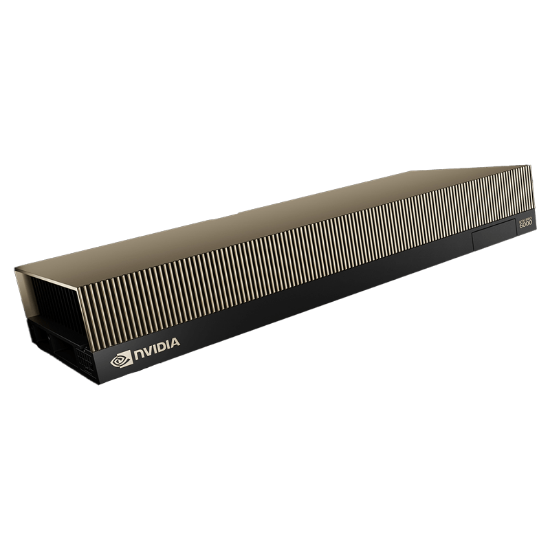
- Compliance: HIPAA, HITECH, and FDA requirements govern healthcare AI infrastructure HIPAA-ready GPU workstation
- Deployment: On-premise preferred over cloud for protected health information (PHI)
- Security: FIPS 140-3 encryption, RBAC, audit logging, and hardware TPM required
- Use Cases: Medical imaging, genomics, drug discovery, clinical decision support
- Procurement: Available through GSA Schedule with HIPAA BAAs included
Artificial intelligence is transforming healthcare delivery, medical research, and patient outcomes across the United States. However, healthcare AI infrastructure carries unique requirements that distinguish it from enterprise deployments: HIPAA compliance, patient data protection, FDA validation for clinical applications, and integration with existing electronic health record (EHR) systems. This guide provides comprehensive technical guidance for healthcare organizations building or expanding AI computing infrastructure.
HIPAA-Compliant GPU Infrastructure
The Health Insurance Portability and Accountability Act (HIPAA) imposes strict requirements on any infrastructure handling protected health information (PHI). For GPU-accelerated AI systems processing medical imaging, genomic data, or clinical notes, compliance requires specific architectural decisions at every layer.
Data encryption requirements: All PHI must be encrypted at rest (AES-256) and in transit (TLS 1.3 minimum). GPU memory buffers require attention—standard GPUs do not automatically encrypt data in VRAM. NVIDIA H100's TEE (Trusted Execution Environment) provides hardware-enforced memory isolation and encryption for in-use data, making it the recommended GPU for healthcare AI workloads. For AMD platforms, MI300X with AMD Infinity Guard provides comparable protections.
Network segmentation: Healthcare AI deployments must isolate GPU compute resources on dedicated VLANs with strict firewall rules. The recommended architecture places GPU servers on a secured compute subnet with access limited to authorized model training and inference services. All access must be logged and auditable per HIPAA audit control requirements (45 CFR §164.312(b)).
Access controls: Implement role-based access control (RBAC) with multi-factor authentication for all GPU infrastructure management interfaces. BMC/IPMI access must be restricted to authorized administrators and logged. NVIDIA DGX and NTS-configured Supermicro platforms support LDAP/Active Directory integration for centralized access management.
Medical Imaging AI Infrastructure
Medical imaging—including MRI, CT, X-ray, and pathology slides—represents the largest AI opportunity in healthcare. A single CT study generates 500-5,000 images at 512x512 resolution, while pathology whole-slide images reach 100,000x100,000 pixels (10-20GB per slide). Processing these at scale requires specialized GPU infrastructure.
Recommended configuration for radiology AI: 4-8x NVIDIA L40S GPUs in a 2U or 4U server configuration. L40S GPUs provide 48GB of VRAM (sufficient for 3D medical image volumes) and support FP8 inference for real-time processing. For training, H100 GPUs with 80GB VRAM handle large 3D volumes and enable higher batch sizes.
Storage architecture: Medical imaging AI requires a tiered storage approach. Hot tier: NVMe flash storage (50-100TB) for active studies, delivering 5-10 GB/s read throughput. Cold tier: HDD-based storage (500TB-2PB) for archival studies accessed via PACS integration. The storage system must support DICOM protocol natively for seamless EHR integration.
Genomic AI Computing
Whole-genome sequencing generates 100-200GB of raw data per genome, and population-scale genomic studies (10,000+ genomes) require petabyte-scale storage and petaFLOP-scale compute. GPU acceleration reduces genome analysis time from weeks to hours for key workflows.
GPU-accelerated genomics pipeline: Alignment (BWA-MEM2 on GPU): 45 minutes per genome (vs 4-6 hours CPU). Variant calling (DeepVariant/Parabricks on GPU): 30 minutes per genome (vs 3-5 hours CPU). Joint genotyping (population-scale): 2-4 hours for 10,000 genomes vs 3-5 days CPU. Recommended configuration: 4-8x H100 GPUs per analysis node with 2-4 nodes for production throughput.
Memory requirements: Genomic analysis is memory-intensive. Each analysis node requires 1-2TB of system RAM in addition to GPU memory. The NTS Elite Command 2U server supports up to 4TB DDR5 with 12-channel memory architecture, making it ideal for genomics workloads.
FDA Validation and Regulatory Considerations
AI systems used in clinical decision support require FDA 510(k) clearance or, for novel applications, De Novo classification. The infrastructure supporting these systems must be validated per 21 CFR Part 820 (Quality System Regulation) and 21 CFR Part 11 (Electronic Records).
Validation requirements: GPU server configuration must be documented and version-controlled. Software dependencies (CUDA, cuDNN, PyTorch/TensorFlow versions) must be validated and frozen for the duration of clinical studies. Hardware changes require revalidation—making standardized, reproducible GPU platforms essential for regulated environments.
NTS validation program: NTS offers pre-validated healthcare AI configurations with documented hardware-software compatibility matrices, performance validation reports, and configuration management tools to support FDA audit readiness.
Related Content
Explore more about this topic:
- GPU Infrastructure for Medical Research
- Multi-Modal AI Model Infrastructure
- AI Infrastructure for Universities
Can cloud GPU services be used for HIPAA-compliant AI?
AWS, Azure, and GCP offer HIPAA-eligible GPU instances with BAA (Business Associate Agreement) execution. However, many healthcare organizations prefer on-premise infrastructure for sensitive data to maintain full control over data residency, reduce recurring costs, and simplify compliance audits.
What GPU is best for medical image segmentation?
NVIDIA L40S provides the best price-performance for medical image segmentation with 48GB VRAM supporting 3D U-Net and transformer-based architectures. For very large 3D volumes, H100's 80GB enables higher resolution processing without tiling.
How does healthcare AI infrastructure differ from enterprise AI?
Healthcare infrastructure requires HIPAA-compliant data handling, integration with medical imaging standards (DICOM, HL7 FHIR), FDA validation readiness, higher reliability requirements (99.99%+ uptime for clinical systems), and specialized storage for medical data formats.