
AI Infrastructure ROI Calculator: Maximizing Investment R…
Quick Summary
- Training ROI: 2-5x productivity improvement, 60-80% faster model iteration
- Inference ROI: 3-10x cost reduction vs cloud inference at scale
- Breakeven: Typical on-premise AI infrastructure pays back in 12-18 months
- Hidden Costs: Cooling, power, networking add 40-60% to base hardware cost
- Federal: GSA pricing reduces procurement overhead by 15-25% vs commercial
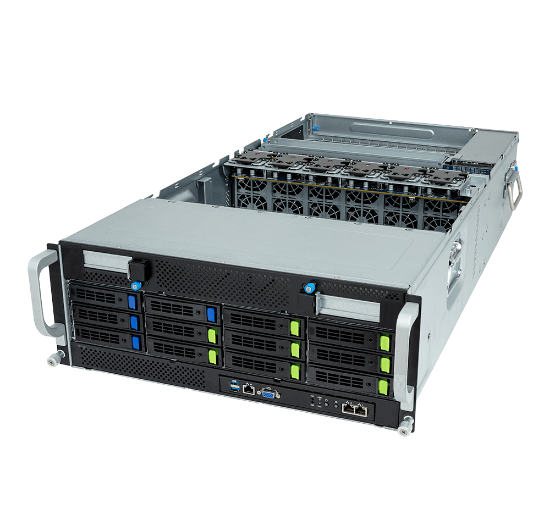
Investing in AI infrastructure represents one of the most significant capital decisions enterprises and government agencies will make in the current technology cycle. GPU servers, networking fabrics, storage systems, and facility modifications for AI training and inference carry substantial upfront costs, and the rapid pace of GPU technology advancement raises legitimate questions about ROI timelines and asset lifecycle management. This guide provides a rigorous framework for calculating and optimizing AI infrastructure ROI Enterprise GPU server across enterprise, research, and government deployment scenarios.
Total Cost of Ownership (TCO) Framework
AI infrastructure TCO encompasses hardware acquisition, facility modifications, power and cooling, software licensing, personnel, and ongoing operational costs. The industry-standard TCO model for GPU infrastructure spans a 3-5 year analysis period aligned with GPU technology refresh cycles.
| Cost Category | Annual Cost (8-GPU Server) | Annual Cost (64-GPU Cluster) | Annual Cost (512-GPU Cluster) |
|---|---|---|---|
| Hardware Depreciation | $100,000-$150,000 | $800,000-$1.2M | $6.4M-$9.6M |
| Facility (space, cooling) | $15,000-$30,000 | $120,000-$240,000 | $960K-$1.9M |
| Power (at $0.12/kWh) | $7,000-$15,000 | $56,000-$120,000 | $448K-$960K |
| Software Licensing | $5,000-$20,000 | $40,000-$160,000 | $320K-$1.28M |
| Personnel (1-5 admins) | $150,000-$250,000 | $300,000-$500,000 | $750K-$1.5M |
| Network & Storage | $20,000-$40,000 | $200,000-$400,000 | $1.6M-$3.2M |
| Maintenance & Support | $15,000-$25,000 | $120,000-$200,000 | $960K-$1.6M |
| Total Annual Cost | $312K-$530K | $1.6M-$2.8M | $12.8M-$22.4M |
Value Creation: Quantifying AI Infrastructure Benefits
ROI calculation requires quantifying the value created by AI infrastructure. For enterprises, this includes direct revenue from AI-powered products, cost savings from AI-automated processes, and strategic value from accelerated AI capabilities.
Direct revenue generation: AI-powered products and features generate measurable revenue. For a financial services firm using AI for fraud detection, the value includes fraud losses avoided ($500K-$5M annually depending on transaction volume) plus operational efficiency gains ($200K-$1M annually from automated investigation workflows).
Cost savings through automation: AI automating previously manual processes creates measurable labor savings. A manufacturing AI quality inspection system replacing 10 human inspectors saves $500K-$800K annually in direct labor costs, with additional savings from reduced defect rates and warranty claims.
Research acceleration: For research institutions, GPU infrastructure accelerates time-to-discovery by 5-50x compared to CPU-only computing. A medical research team using GPU-accelerated drug discovery completes in 2-4 months what previously required 12-18 months, with potential value of $10M-$100M+ per accelerated drug candidate.
GPU Utilization Optimization
The single most important factor in AI infrastructure ROI is GPU utilization. Industry surveys show average GPU utilization of 30-50% across enterprise deployments, representing massive wasted capital. Optimizing utilization to 70-85% can effectively double ROI.
Utilization improvement strategies: Implement GPU scheduling with priority-based preemption to eliminate idle GPU time. Use MIG (Multi-Instance GPU) partitioning to right-size GPU allocations. Deploy inference workloads to fill batch job gaps. Implement automated GPU power management (reducing power to idle GPUs by 70%). Monitor utilization at 1-minute granularity with automated alerts for underutilization.
Right-sizing GPU configurations: Many organizations deploy H100 GPUs for workloads that would run effectively on L40S or A10 GPUs at 60-70% lower cost. Conduct workload profiling to match GPU selection to actual computational requirements—not all AI workloads need H100-class performance.
Technology Refresh Strategy
GPU technology advances at approximately 2x performance per watt every 2 years (H100 vs A100: ~5x AI performance at 1.7x power). This rapid improvement creates compelling refresh economics that must be factored into ROI calculations.
Optimal refresh cycle: For training-intensive workloads replacing H100 with H200 or B200 provides 1.5-2x throughput improvement. For inference workloads, upgrading every 2-3 generations (e.g., A100 to B200) provides 4-8x performance improvement. The optimal refresh cycle is 2-3 years for training clusters, 3-4 years for inference clusters.
Secondary market value: Decommissioned GPUs retain significant value. A100 80GB GPUs decommissioned in 2025-2026 retain 35-50% of original value for inference workloads. Establishing GPU trade-in or resale programs reduces effective hardware cost by 30-40% over the infrastructure lifecycle.
Government ROI Considerations
Federal AI infrastructure ROI includes mission impact beyond financial metrics. Key value drivers for government deployments include: accelerated intelligence analysis (reducing analyst time per report by 5-10x), improved mission effectiveness (AI-powered targeting, logistics optimization, threat detection), and technology modernization (replacing legacy systems with AI-enhanced capabilities).
Government procurement requires benefit-cost analysis (BCA) per OMB Circular A-94. AI infrastructure BCAs must quantify both quantitative benefits (FTE savings, throughput improvements) and qualitative benefits (mission effectiveness, strategic capability).
Related Content
Explore more about this topic:
- AI Model Serving Architecture
- Best GPU Configuration for GPT-4 Fine-Tuning
- AI Infrastructure TCO: Budgeting Guide
What is the payback period for AI GPU infrastructure?
Enterprise inference infrastructure typically achieves payback in 12-18 months. Training infrastructure requires 24-36 months for full ROI. Research infrastructure is evaluated on grant-funded research output rather than financial payback.
How does cloud vs on-premise ROI compare?
Cloud GPU services (Azure ND-series, AWS P5, GCP A3) provide 2-3x higher hourly cost but zero upfront capital. For intermittent workloads (60% utilization), on-premise provides 40-60% 3-year TCO savings.
What happens to ROI if GPU technology becomes obsolete?
GPU technology obsolescence is managed through the refresh cycle. Deploying a 3-year depreciation schedule with secondary market resale provides financial protection. Inference infrastructure has longer useful life than training infrastructure—older GPUs remain viable for production inference after being replaced for training.