
AI Model Serving Architecture: From Development to Produc…
Quick Summary
- Serving: Triton Inference Server supports multi-framework models
- Optimization: TensorRT converts models for maximum GPU efficiency
- Scaling: Kubernetes with KFServing for auto-scaling inference
- Monitoring: Prometheus + Grafana for GPU utilization tracking
- CI/CD: A/B testing, canary deployments, model versioning
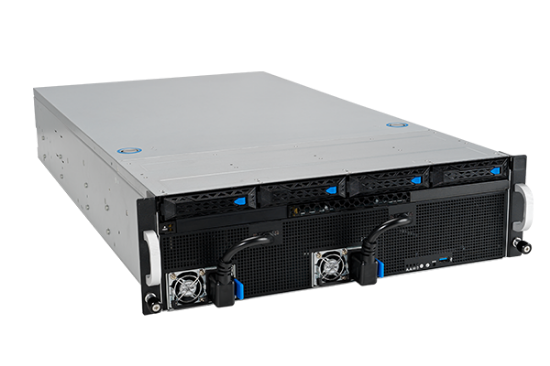
AI Model Serving: From Development to Production HGX B200 server
Transitioning AI models from development to production serving is one of the most challenging phases of the AI lifecycle. Model serving infrastructure must provide low-latency inference, high-throughput batch processing, model versioning, A/B testing, monitoring, and auto-scaling—all while maintaining reliability and security.
Serving Infrastructure Components
A production model serving platform consists of multiple layers. The inference server (Triton, TensorRT-LLM, vLLM, TorchServe) loads and runs models on GPUs. The orchestration layer (Kubernetes with KFServing/KServe) manages deployment, scaling, and routing. The monitoring stack (Prometheus, Grafana, MLflow) tracks performance, resource utilization, and data drift. The CI/CD pipeline manages model updates through staging and production deployments.
Model Optimization Pipeline
Before deployment, models should be optimized through a standardized pipeline. First, convert to TensorRT or ONNX format. Second, apply quantization (FP16, INT8, or FP8) with calibration datasets. Third, profile with representative workloads to establish latency and throughput baselines. Fourth, deploy with A/B testing comparing optimized and baseline versions.
GPU Serving Configuration
| Model Size | Serving GPU | Configuration | Max Throughput |
|---|---|---|---|
| <7B parameters | L4 (24GB) | Single GPU, dynamic batching | 5,000 req/s |
| 7-13B parameters | L40S (48GB) | Single GPU, TensorRT | 2,000 req/s |
| 13-70B parameters | H100 (80GB) | 2-8 GPUs, TP+DP | 500-2,000 req/s |
| >70B parameters | H200 (141GB) | 4-32 GPUs, multi-node | 100-500 req/s |
Related Content
Explore more about this topic:
- Best GPU Configuration for GPT-4 Fine-Tuning
- AI Infrastructure TCO: Budgeting Guide
- Liquid Cooling vs Air Cooling for AI Racks
What is the best serving framework for production?
NVIDIA Triton Inference Server is the most widely adopted enterprise serving platform, supporting multi-framework models, dynamic batching, and GPU metric monitoring. For LLM-specific serving, TensorRT-LLM provides highest performance, while vLLM offers simpler deployment with competitive throughput.
How do I handle model updates without downtime?
Use Kubernetes rolling updates with canary deployments. Route 5-10% of traffic to the new model version, monitor for latency regression or quality degradation, then gradually increase traffic. Blue-green deployment with full duplicate infrastructure enables instant rollback if issues arise.