
AI Server Form Factors: 1U, 2U, 4U, and 8U Server Comparison
Quick Summary
- 1U: 1-2 GPUs, edge/light inference, 1-3kW
- 2U: 2-4 GPUs, inference serving, 2-6kW
- 4U: 4-8 GPUs, production training, most versatile
- 8U: 8-16 GPUs, flagship training, liquid cooling needed
- Density: 4U offers best balance of GPU count and serviceability
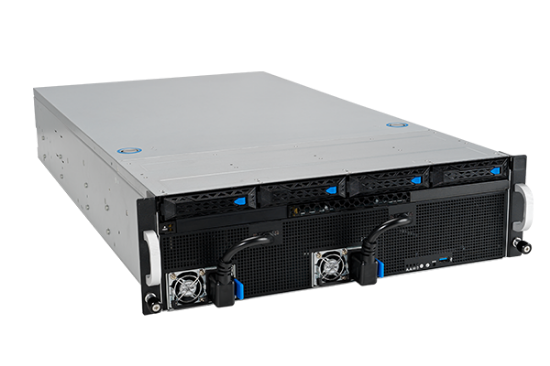
AI Server Form Factors 4U liquid-cooled GPU server: Sizing Your GPU Infrastructure
For scalable AI deployments, explore the 4U liquid-cooled GPU server and 1U enterprise server configurations.
GPU servers are available in multiple form factors from 1U to 8U, each offering different trade-offs between GPU density, cooling capacity, expansion capability, and deployability. Selecting the right form factor for AI workloads affects data center space utilization, power distribution, cooling requirements, and serviceability. This guide provides a comprehensive comparison of server form factors for GPU-accelerated computing.
| Form Factor | Max GPUs | Cooling | Power per Server | Typical Use Case |
|---|---|---|---|---|
| 1U Server | 1-2 | Air-cooled | 1-3 kW | Edge inference, single GPU serving |
| 2U Server | 2-4 | Air-cooled | 2-6 kW | Inference, small-scale training |
| 4U Server | 4-8 | Air or liquid | 3-10 kW | Production training, dense inference |
| 5U Server | 8-10 | Air or liquid | 5-12 kW | HGX H100, high-density training |
| 8U Server | 8-16 | Liquid preferred | 7-15 kW | HGX B200, flagship AI training |
| 10U+ Server | 16-32 | Liquid required | 15-30 kW | DGX SuperPOD, frontier AI clusters |
Density vs. Serviceability Trade-offs
Higher-density form factors (8U) provide more GPUs per rack unit but create challenges for cooling, power distribution, and serviceability. An 8U HGX server weighs 200-300 lbs and requires mechanical lifting equipment for installation. 4U servers provide a practical balance of density and serviceability and are the most common form factor for production AI training. For government deployments requiring frequent hardware updates or reconfiguration, 4U servers offer easier access than denser form factors.
Form Factor Impact on Data Center Design
Server form factor selection directly affects data center floor planning. 1U and 2U servers enable higher rack utilization but generate heat density that challenges air cooling. 4U and 8U servers provide better thermal characteristics per GPU but reduce total GPU count per rack. A 4U server with 8 GPUs (2 GPUs per U) offers better cooling efficiency than a 2U server with 4 GPUs (2 GPUs per U) due to larger heatsinks and airflow paths.
Related Content
Explore more about this topic:
- How Tensor Cores Accelerate Deep Learning
- NVIDIA B200 vs H100: Architecture Comparison
- NVIDIA H200 NVL Deep Dive
What form factor is best for enterprise AI?
4U servers with 4-8 GPUs provide the best balance of density, cooling, serviceability, and cost for most enterprise AI deployments. 8U servers are recommended for flagship training infrastructure where maximum GPU density per node is required.
Can different form factors be mixed in one cluster?
Yes. A typical AI cluster might use 8U servers for training nodes (maximum GPU density), 4U servers for inference nodes (balanced design), and 2U servers for storage and management nodes.