
High-Performance Storage Architecture for AI Training and…
Quick Summary
- Capacity: LLM training datasets range from 5TB to 100TB+
- Throughput: Each GPU needs 2-5 GB/s sustained read during training
- Checkpointing: Single checkpoint can be 100-800GB, needs high write speed
- Architecture: Parallel filesystem with NVMe caching tier recommended
- Government: FIPS 140-3 encryption required for data at rest in federal deployments
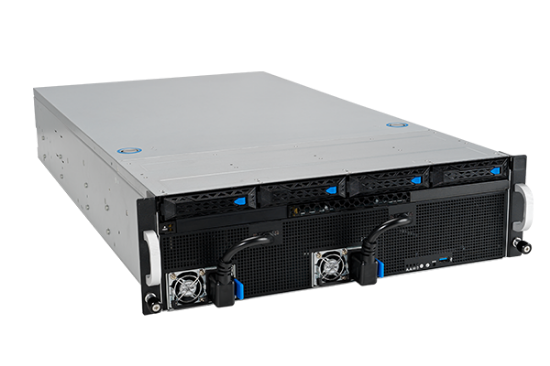
Storage Architecture for AI High-capacity storage server Workloads
AI training and inference workloads place unique demands on storage infrastructure. Unlike traditional enterprise workloads characterized by small random I/O, AI training generates massive sequential reads for dataset loading and large sequential writes for checkpoint saving—often simultaneously. This dual workload pattern requires storage systems specifically architected for AI data flows.
Storage Performance Requirements
| Workload | I/O Pattern | Bandwidth per GPU | Latency Sensitivity |
|---|---|---|---|
| Training Data Loading | Large sequential reads | 2-5 GB/s | Moderate |
| Checkpoint Writing | Large sequential writes | 1-3 GB/s | Low |
| Model Loading (Inference) | Large sequential reads | 10-50 GB/s burst | High |
| Logging and Metrics | Small random writes | Minimal | Low |
| Dataset Preprocessing | Mixed read/write | 1-5 GB/s | Low |
Parallel Filesystem Options
AI training clusters require parallel filesystems that stripe data across multiple storage nodes for aggregate throughput scaling. Lustre, the dominant filesystem in HPC environments, delivers proven performance at exascale with open-source flexibility. WEKA provides a purpose-built AI storage platform with NVMe-native architecture and multi-protocol support (NFS, SMB, S3). GPFS/Storage Scale offers enterprise features including compression, encryption, and snapshots.
NVMe Caching Tier
GPU servers should include local NVMe storage for dataset caching. Even with a high-performance parallel filesystem, local NVMe cache reduces data loading latency by 10-50x by serving frequently accessed data from local drives. Each training node should include 4-16TB of NVMe storage configured as a distributed caching layer using tools like Alluxio or the filesystem's built-in caching.
Government Security Requirements
Federal AI storage deployments require encryption at rest using FIPS 140-3 validated modules. NIST SP 800-53 security controls require audit logging for all data access. For classified environments, storage systems must support data labeling and multi-level security (MLS) policies. NTS provides storage solutions meeting these requirements for government AI infrastructure.
Related Content
Explore more about this topic:
- NVIDIA B200 vs H100: Architecture Comparison
- What is NVLink? GPU Interconnect Guide
- How Tensor Cores Accelerate Deep Learning
How much storage do I need for AI training?
A practical rule of thumb: 5-10GB of storage per 1B model parameters for checkpoint space, plus 1-50TB for training datasets. A typical 70B model training run needs 5-20TB of total storage.
Can I use standard NAS for AI training?
Standard NAS lacks the parallel throughput needed for multi-node GPU training. A single A100/H100 GPU can saturate a 100GbE link during data loading. Training clusters with 100+ GPUs require parallel filesystems with aggregate throughput measured in tens of GB/s.