
Data Center Tier Classification for AI Workloads: What Yo…
Quick Summary
- Tier I: 99.671% uptime, no redundancy, not suitable for AI
- Tier II: 99.741%, partial redundancy, limited AI use
- Tier III: 99.982%, N+1 concurrent maintenance, minimum for AI
- Tier IV: 99.995%, fault-tolerant, 2N redundancy, ideal for AI
- AI Specific: Power density requirement is the key differentiating factor
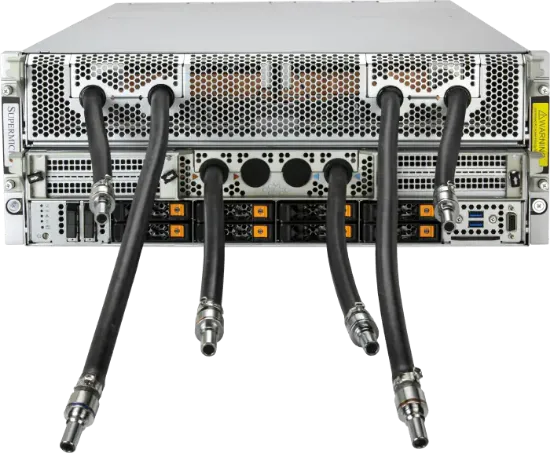
Data Center Tier Classification Data center GPU server for AI
The Uptime Institute Tier Classification system provides a standardized framework for data center infrastructure reliability, redundancy, and maintainability. For AI workloads, Tier classification affects GPU cluster availability, maintenance scheduling, and total cost of infrastructure ownership. Understanding Tier requirements for AI is essential for government and enterprise data center planning.
Tier Classification Overview
| Tier | Uptime | Annual Downtime | Redundancy | AI Suitability |
|---|---|---|---|---|
| Tier I | 99.671% | 28.8 hours | None (N) | Not recommended |
| Tier II | 99.741% | 22.0 hours | Partial (N+1) | Development only |
| Tier III | 99.982% | 1.6 hours | Concurrent maintenance (N+1) | Production training |
| Tier IV | 99.995% | 0.8 hours | Fault-tolerant (2N) | Mission-critical AI |
AI-Specific Tier Requirements
AI training workloads have unique availability characteristics compared to traditional enterprise applications. A multi-node training job spanning 128 GPUs fails if any single node loses power or network connectivity. This tight coupling means Tier III concurrent maintenance—the ability to perform maintenance without downtime—is critical for AI clusters. Tier II facilities require full cluster shutdown for maintenance, wasting GPU compute time.
Power Path Redundancy for GPU Clusters
Tier III facilities provide N+1 redundancy with dual power paths supporting concurrent maintenance. Each GPU server requires dual power feeds (A and B) connected to separate UPS and generator systems. For a 1MW AI cluster, this means 2MW of UPS capacity, 2 x 1.5MW generators, and dual distribution paths—doubling power infrastructure costs compared to Tier II.
Related Content
Explore more about this topic:
- Liquid Cooling vs Air Cooling for AI Racks
- Coolant Distribution Unit Selection
- Federal AI Procurement Guide: GSA, SEWP, ITES-4H
Is Tier IV necessary for AI training?
Tier IV's fault-tolerant architecture (2N redundancy) provides protection against equipment failure without switching to redundant systems. For most AI training workloads, Tier III concurrent maintenance capability is sufficient. Tier IV is recommended for continuous inference serving where even milliseconds of downtime have business impact.
How does Tier classification affect PUE?
Higher Tier classifications typically result in lower PUE due to redundant cooling and power distribution losses. A Tier IV facility may have 0.1-0.2 higher PUE than a comparable Tier III facility with the same cooling technology.