
Running DeepSeek-R1 on Enterprise GPU Infrastructure
Quick Summary
- Model Size: DeepSeek-R1 671B parameters, ~400GB in FP16
- Inference: Requires 4-8x H100 for real-time serving
- MOE Architecture: Mixture of Experts activates only ~37B per token
- Optimization: INT4 quantization reduces to ~200GB for single-node inference
- Deployment: Available through NTS with full enterprise support
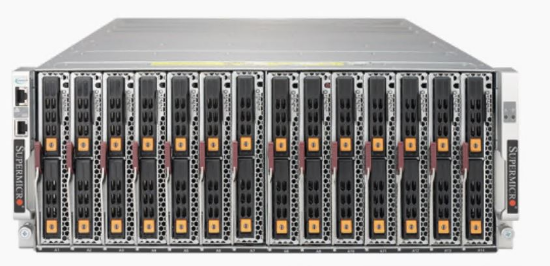
Deploying DeepSeek-R1 on Enterprise HGX B200 server GPU Infrastructure
DeepSeek-R1 represents a significant advancement in open-weight language models, achieving competitive performance with proprietary models through its Mixture-of-Experts (MoE) architecture and reinforcement learning-based training methodology. With 671 billion total parameters but only 37 billion activated per token through its MoE routing mechanism, DeepSeek-R1 presents unique infrastructure requirements that differ from dense models like Llama 3.
Memory and Compute Requirements
DeepSeek-R1 in FP16 precision requires approximately 400GB of GPU memory for the full model. This exceeds single-GPU memory capacity, requiring model parallelism across multiple GPUs. With 4-bit quantization, memory requirements drop to approximately 200GB, fitting on 2-3 H100 GPUs. For production inference serving, NTS recommends 4-8 H100 GPUs for optimal throughput with reasonable batch sizes.
MoE-Specific Infrastructure Considerations
The Mixture-of-Experts architecture introduces unique serving challenges. Expert balancing requires all GPU nodes to be connected for load-balanced routing. Token routing latency varies based on expert selection patterns. KV cache management must account for the larger state space of MoE architectures. vLLM and TensorRT-LLM have added MoE support, but deployment is more complex than dense models.
DeepSeek-R1 for Government Applications
DeepSeek-R1's open-weight nature makes it attractive for government and defense applications where model transparency and auditability are requirements. However, organizations should verify supply chain security for models originating from non-allied nations. Deployment on air-gapped, on-premise infrastructure with secured model weights addresses security concerns while enabling access to the model's capabilities.
Related Content
Explore more about this topic:
- What is NVLink? GPU Interconnect Guide
- NVIDIA B200 vs H100: Architecture Comparison
- NVIDIA H200 NVL Deep Dive
Can DeepSeek-R1 run on a single GPU?
No. The model requires at least 200GB (4-bit quantized) and ideally 400GB (FP16), exceeding any single GPU's capacity. Minimum configuration is 2x H100 for quantized inference or 4x H100 for full-precision serving.
What serving framework supports DeepSeek-R1?
vLLM with MoE support and TensorRT-LLM both support DeepSeek-R1 inference. NVIDIA Triton Inference Server with TensorRT-LLM backend provides enterprise-grade serving with monitoring and auto-scaling capabilities.