
Edge AI Deployment Architectures: Bringing Intelligence C…
Quick Summary
- Thin Edge: Sub-25W, 0.5-5 TOPS for IoT and sensor processing
- Thick Edge: 50-500W, 50-200 TOPS for complex models
- Edge Cluster: 1-10kW, 200-1000+ TOPS for high-throughput workloads
- Defense: MIL-STD-810H ruggedization, anti-tamper, SWaP-optimized
- Security: TPM 2.0, secure boot, AES-256 encryption, NSA Suite B crypto
Edge AI—deploying artificial intelligence at the point of data generation rather than in centralized cloud data centers—is transforming industries from manufacturing and defense to healthcare and telecommunications. Edge AI inference enables real-time decision-making, reduces bandwidth costs, addresses data sovereignty requirements, and enables AI applications in disconnected or bandwidth-constrained environments. This guide provides comprehensive technical guidance for architecting and deploying edge AI infrastructure across diverse use cases.
Edge AI Architecture Patterns
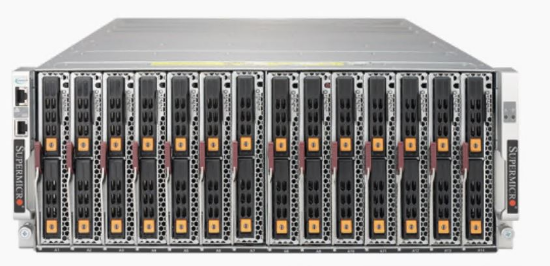
Edge AI deployment Edge blade servers follow several canonical architecture patterns, each with distinct hardware requirements, networking characteristics, and operational models. The choice of architecture depends on latency requirements, data volumes, connectivity availability, and environmental constraints.
Thin Edge Pattern: Lightweight inference on resource-constrained devices (Raspberry Pi, NVIDIA Jetson Nano, Intel NUC). Suitable for sensor processing, anomaly detection, and simple classification. GPU requirements: 0.5-5 TOPS. Power: 5-25W. Models: quantized INT8, sub-500MB.
Thick Edge Pattern: Full inference capability on ruggedized edge servers (NVIDIA Jetson AGX Orin, NTS Edge AI 1U server). Supports complex models for computer vision, natural language processing, and sensor fusion. GPU requirements: 50-200 TOPS. Power: 50-500W. Models: FP16 or INT8, 1-10GB.
Edge Cluster Pattern: Multiple edge nodes connected via local high-speed fabric for distributed inference on high-throughput data streams. Suitable for manufacturing quality inspection, video surveillance analytics, and autonomous systems. GPU requirements: 200-1000+ TOPS aggregate. Power: 1-10kW. Typically deployed in edge micro data centers or hardened enclosures.
Hardware Selection for Edge AI Deployments
Edge AI hardware selection involves trade-offs between inference performance, power consumption, environmental ruggedness, and cost. The NVIDIA Jetson family dominates the edge AI market, but purpose-built edge GPU servers offer superior performance for demanding workloads.
| Platform | AI Performance | Power | Form Factor | Best For |
|---|---|---|---|---|
| NVIDIA Jetson Orin NX | 40 TOPS | 15-25W | 70x45mm module | IoT, robotics, drones |
| NVIDIA Jetson AGX Orin | 275 TOPS | 30-60W | 120x120mm module | Autonomous machines, medical |
| NTS Edge AI 1U (L4) | 120 TOPS | 300W | 1U rackmount | Telco, industrial, defense |
| NTS Edge AI 2U (L40S) | 900+ TOPS | 700W | 2U rackmount | Video analytics, sensor fusion |
| NTS Edge AI 4U (H100) | 3,200+ TOPS | 2,500W | 4U rackmount | High-throughput edge, C4ISR |
Defense and Government Edge AI
Edge AI for defense applications—including autonomous systems, intelligence analysis, and battlefield decision support—requires additional capabilities beyond commercial edge deployments. These systems must operate in contested environments with stringent security, SWaP (Size, Weight, and Power), and environmental requirements.
Ruggedization requirements: MIL-STD-810H certification for shock, vibration, humidity, salt fog, and altitude. Extended temperature range (-40°C to +65°C). IP65 or higher ingress protection for dust and water resistance. Conformal coating for circuit boards to prevent condensation damage.
Security requirements: Hardware-root-of-trust with TPM 2.0 or discrete security processor. Secure boot with measured launch. Encryption at rest (AES-256) and in transit (NSA Suite B cryptography). Anti-tamper mechanisms per DoD 5200.39. NTS defense-grade edge servers include all of these capabilities in ruggedized, SWaP-optimized form factors.
Connectivity: Defense edge AI systems must operate in disconnected, intermittent, limited (DIL) environments. Edge servers require store-and-forward capability, local data buffering (1-10TB SSD), and opportunistic synchronization when connectivity is available. Software-defined networking with auto-discovery simplifies deployment in contested communications environments.
Industrial Edge AI Deployments
Industrial edge AI for manufacturing, energy, and logistics differs from enterprise deployments in environmental requirements, reliability expectations, and integration with industrial control systems.
Industrial GPUs: NVIDIA L4 and L40 GPUs support industrial temperature ranges (0-55°C vs 0-35°C for data center GPUs) and offer longer product lifecycles (3-5 years vs 1-2 years). For extreme environments, conduction-cooled GPU modules eliminate fan failures in dusty conditions.
Integration with PLCs and SCADA: Edge AI servers must interface with industrial protocols (Modbus, Profinet, EtherCAT, OPC-UA) for real-time control loop integration. The NTS Edge AI platform includes optional industrial I/O modules for direct sensor connectivity.
Related Content
Explore more about this topic:
- AI Infrastructure ROI Calculator
- Best GPU Configuration for GPT-4 Fine-Tuning
- AI Model Serving Architecture
What is the typical latency budget for edge AI inference?
Real-time edge inference (e.g., autonomous braking, industrial safety systems) requires end-to-end latency under 10ms. Cloud-based inference typically adds 50-200ms network latency, making it unsuitable for safety-critical applications. Edge inference eliminates network latency entirely.
How does edge AI handle model updates in the field?
Over-the-air (OTA) model updates using differential package management minimize bandwidth requirements. Delta updates (sending only changed model weights) reduce update sizes by 80-95%. Rollback capability to previous model versions is essential for production deployments.
Can edge AI systems operate without internet connectivity?
Yes. Edge AI systems are designed to operate fully disconnected, with local storage for inference results, logs, and model checkpoints. Data synchronization occurs when connectivity is available, using bandwidth-efficient differential sync protocols.