
FISMA-Compliant GPU Infrastructure for Federal AI Deploym…
Quick Summary
- FISMA: Federal Information Security Management Act requirements
- NIST SP 800-53: 400+ security controls mapped to impact levels
- GPU Security: Confidential computing, TEE, encrypted memory required
- Continuous Monitoring: Real-time security logging and SIEM integration
- NTS Solutions: FISMA-ready GPU configurations available via GSA Schedule
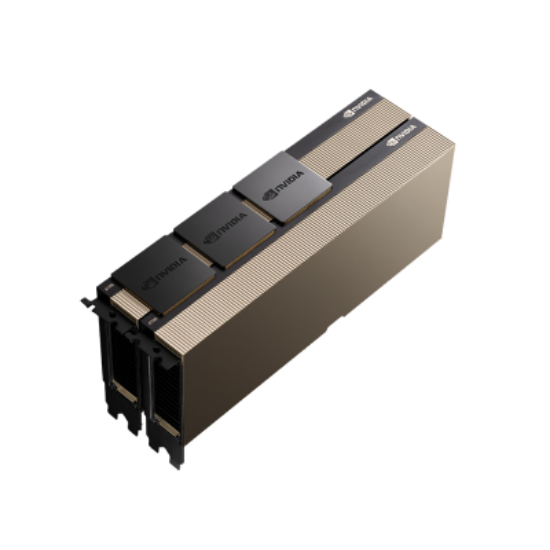
FISMA Compliance for GPU Infrastructure GPU compute server
The Federal Information Security Management Act (FISMA) requires federal agencies to develop, document, and implement agency-wide information security programs for the systems that support their operations. For AI infrastructure—including GPU clusters, model training platforms, and inference serving systems—FISMA compliance demands careful attention to security controls across the complete infrastructure stack.
FISMA Impact Levels for AI Systems
| Impact Level | Security Controls | Typical AI Use Cases |
|---|---|---|
| Low | NIST SP 800-53 (baseline) | Public data AI research, unclassified analytics |
| Moderate | NIST SP 800-53 + enhancements | CUI processing, federal employee AI tools |
| High | NIST SP 800-53 + high enhancements | Classified AI, law enforcement, critical infrastructure |
Most AI infrastructure in federal agencies requires Moderate impact level compliance at minimum. The security controls for Moderate impact levels include 400+ specific requirements organized into 18 control families, covering everything from access control (AC) through system and information integrity (SI).
GPU-Specific FISMA Controls
Several FISMA controls are particularly relevant to GPU-based AI systems. Cryptographic controls for training data encryption require FIPS 140-3 validated modules. GPU memory encryption (available in H100 confidential computing mode) supports FISMA encryption requirements for data in use. Physical security controls must account for the value of GPU hardware as a high-value asset requiring enhanced access controls and video surveillance.
NTS FISMA-Ready Configurations
NTS provides GPU server configurations pre-mapped to NIST SP 800-53 controls, including secure boot with TPM 2.0, FIPS 140-3 encryption for storage and memory, audit-capable BMCs with syslog/SIEM integration, and hardware-root-of-trust for supply chain integrity verification.
Related Content
Explore more about this topic:
- AI Infrastructure for Defense and Intelligence
- CMMC 2.0 Compliance for AI Infrastructure
- Federal AI Procurement Guide: GSA, SEWP, ITES-4H
What is the difference between FISMA and FedRAMP for AI?
FISMA applies to federal agency-operated systems. FedRAMP is a program for cloud services used by federal agencies. On-premise GPU infrastructure follows FISMA. Cloud AI services follow FedRAMP.
Can commercial GPU cloud services achieve FISMA compliance?
Commercial cloud services achieve FedRAMP authorization, not FISMA directly. Agencies consuming FedRAMP-authorized services assume responsibility for agency-specific FISMA requirements through the shared responsibility model.