
GPU Infrastructure for Medical Research and Drug Discovery
Quick Summary
- Drug Discovery: Virtual screening requires 1000+ GPU hours per target
- Genomics: GPU accelerates sequence alignment by 50-100x
- Imaging: AI diagnostics benefit from L40S multiple-instance GPU
- HIPAA: Compliance requires encrypted storage and audit trails
- NTS: HIPAA-compliant GPU configurations for medical research
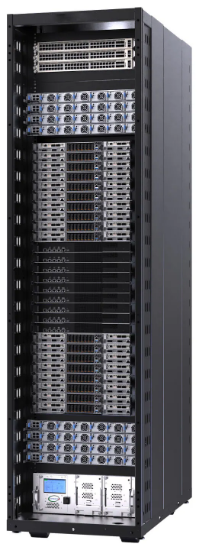
GPU Infrastructure for Medical Research GPU workstation
Medical research—including drug discovery, genomics, medical imaging, and clinical decision support—has been transformed by GPU-accelerated AI. Each application area demands specialized infrastructure configurations addressing data privacy requirements, computational patterns, and regulatory compliance.
Drug Discovery Workflows
Virtual screening of chemical compounds against protein targets is one of the most computationally intensive workloads in pharmaceutical research. A single virtual screening campaign evaluating 10 million compounds against 1,000 targets requires approximately 1 million GPU hours. H100 clusters of 64-256 GPUs reduce this to days or weeks rather than years.
Genomics AI Requirements
GPU-accelerated genomics pipelines process whole genome sequences 50-100x faster than CPU-only approaches. The NVIDIA Parabricks pipeline on a single H100 GPU processes a whole human genome in under 30 minutes versus 24+ hours on CPU. For population-scale genomics studies, clusters of 16-64 GPUs enable processing of thousands of genomes per day.
Medical Imaging AI
AI-powered medical imaging analysis requires GPUs with sufficient memory for high-resolution 3D medical volumes (CT, MRI, PET). L40S with 48GB GDDR6 handles most medical imaging models. For 3D volumes with sub-millimeter resolution, H100 with 80GB HBM3 provides capacity for larger batch processing.
Related Content
Explore more about this topic:
- Data Pipeline Architecture for LLM Training
- AI Infrastructure for Universities
- NVIDIA B200 vs H100: Architecture Comparison
What compliance requirements apply to medical AI infrastructure?
HIPAA and HITECH require encryption of protected health information (PHI) at rest and in transit, access controls, audit logging, and business associate agreements (BAAs) with infrastructure providers.
How much GPU memory is needed for medical imaging AI?
2D medical imaging (X-ray, mammography) requires 8-16GB. 3D imaging (CT, MRI) requires 24-48GB. Full-resolution 3D pathology imaging may require 80GB+ for high-throughput inference.