
Data Pipeline Architecture for Large Language Model Training
Quick Summary
- Throughput: LLM training requires 10-100 GB/s dataset loading throughput
- Storage: Parallel filesystem (Lustre, GPFS, WEKA) essential for multi-node
- Caching: Local NVMe cache reduces data loading latency by 10-50x
- Preprocessing: Online vs offline tokenization impacts pipeline design
- Checkpointing: Distributed checkpoint save/load must complete in <5 minutes
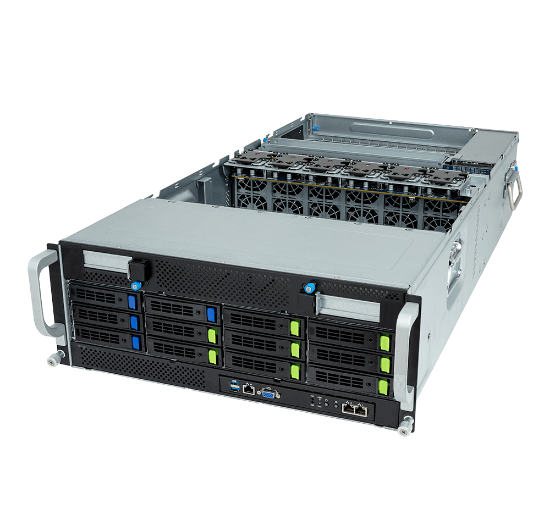
Data Pipeline Architecture HGX B200 server for LLM Training
The data pipeline is the backbone of any LLM training operation, responsible for loading, preprocessing, tokenizing, and feeding training data to GPUs at rates that keep thousands of accelerators fully utilized. A poorly designed data pipeline can reduce overall training throughput by 50% or more, making pipeline architecture as important as GPU selection for training efficiency.
Pipeline Components and Throughput Requirements
An efficient LLM data pipeline consists of several stages: data storage, preprocessing workers, tokenization, shuffling, batching, and GPU transfer. Each stage must operate at sufficient throughput to feed downstream stages without creating backpressure. For a 1,024 GPU H100 cluster training at 40% MFU (model flops utilization), the data pipeline must deliver approximately 20-50 GB/s of tokenized data continuously.
Online vs. Offline Tokenization
Tokenization is typically the most computationally intensive preprocessing step. Offline tokenization pre-processes the entire dataset, storing pre-tokenized data on fast storage. This adds storage costs but eliminates preprocessing overhead during training. Online tokenization performs tokenization on-the-fly, requiring GPU-quality CPU compute for preprocessing workers. Most production LLM training pipelines use offline tokenization with pre-tokenized data in MosaicDS or WebDataset format.
Storage System Architecture
The data pipeline requires a parallel filesystem capable of sustaining 10-100 GB/s of read throughput. Recommended filesystem options include Lustre (open-source, widely deployed in HPC), WEKA (high-performance, NVMe-optimized), and GPFS/IBM Storage Scale (enterprise-grade, POSIX-compliant). All three support the concurrent access patterns required by multi-node LLM training.
Checkpointing: The Hidden Pipeline Challenge
Model checkpointing during LLM training creates massive write bursts. A single checkpoint for a 70B parameter model in FP16 is 140GB. For a 405B model, each checkpoint exceeds 800GB. The data pipeline must handle concurrent read (training data loading) and write (checkpoint saving) without head-of-line blocking. Parallel filesystems with QoS mechanisms prevent checkpoint writes from starving training data reads.
Related Content
Explore more about this topic:
- How Tensor Cores Accelerate Deep Learning
- NVIDIA H200 NVL Deep Dive
- NVIDIA B200 vs H100: Architecture Comparison
How much storage is needed for LLM training?
Training data storage typically requires 5-50TB for curated datasets. Checkpoint storage requires 10-50TB for a single training run. Total training storage typically ranges from 50-500TB depending on model size and training duration.
What is the ideal data pipeline architecture?
The recommended architecture uses parallel filesystem for dataset storage, local NVMe cache on each training node, offline tokenization with pre-tokenized data format, and asynchronous data loading with PyTorch DataLoader or DALI to overlap I/O with computation.