
PUE Optimization for AI Data Centers: Strategies and Best…
Quick Summary
- PUE Definition: Total facility energy divided by IT equipment energy
- Air-Cooled: Typical PUE 1.5-1.8; with optimization can reach 1.3-1.4
- Liquid-Cooled: Achievable PUE 1.05-1.15, 30-40% energy savings
- Key Strategies: Liquid cooling, airflow optimization, free cooling, AI-driven cooling
- Federal Mandate: Executive Order 14057 targets federal data center PUE <1.3
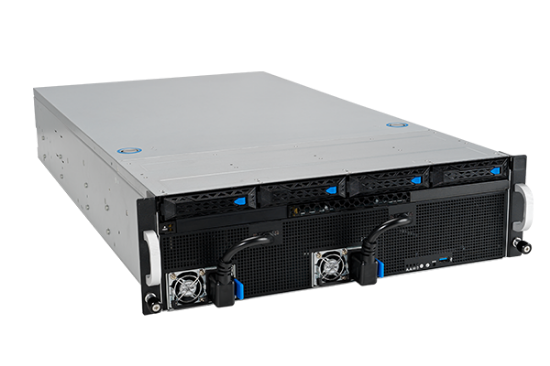
Power Usage Effectiveness (PUE) is the most critical metric for data center energy efficiency, measuring the ratio of total facility energy consumption to IT equipment energy consumption. For AI data centers operating GPU clusters at 20-50kW per rack, PUE optimization Liquid-cooled server directly impacts operating costs, environmental sustainability, and the total cost of AI infrastructure ownership. This guide provides comprehensive strategies for PUE optimization in AI-focused data centers, covering cooling system selection, power distribution efficiency, and operational best practices.
Understanding PUE in AI Data Centers
PUE is calculated as Total Facility Energy / IT Equipment Energy. A PUE of 1.0 represents perfect efficiency (all energy goes to IT equipment), while PUE of 2.0 means facility overhead consumes as much energy as IT. Industry average PUE for enterprise data centers is 1.58. Best-in-class AI data centers achieve PUE of 1.05-1.15 through advanced cooling technologies and efficient power distribution.
For AI data centers, PUE optimization has outsized financial impact due to extreme power densities. A 1MW AI cluster at 1.5 PUE consumes 1.5MW total facility power—$1.05M annual power cost at $0.08/kWh. Optimizing to 1.1 PUE reduces total power to 1.1MW, saving $280,000 annually in power costs alone.
Cooling Strategies for PUE Optimization
Cooling systems account for 30-50% of non-IT energy consumption in typical data centers and represent the largest opportunity for PUE improvement in AI facilities.
Air cooling optimization: For air-cooled GPU deployments, raising server inlet temperatures from the traditional 18-22°C to 24-27°C (ASHRAE A2 allowable range) reduces chiller energy consumption by 15-25%. Implementing hot aisle/cold aisle containment prevents air mixing and enables higher supply air temperatures. Economizer modes (air-side or water-side) provide free cooling when ambient conditions allow, reducing mechanical cooling energy by 40-70% depending on geographic location.
Liquid cooling impact: Direct-to-chip (DTC) and immersion cooling technologies dramatically reduce PUE by eliminating 70-95% of mechanical cooling requirements. DTC systems with water-side economizers achieve PUE of 1.05-1.10 in most climates by rejecting GPU heat directly to outdoor dry coolers without chiller intervention. Immersion cooling systems achieve PUE of 1.02-1.08 with similar economizer integration.
Free cooling hours by region: Data center location significantly impacts cooling efficiency. Northern US locations (Seattle, Chicago, New York) provide 5,000-7,000 annual economizer hours, enabling PUE of 1.15-1.25 for air cooling. Southern locations (Phoenix, Dallas, Atlanta) provide 2,000-4,000 economizer hours, limiting air-cooled PUE to 1.30-1.50. Liquid cooling reduces geographic PUE dependency by enabling effective heat rejection at higher ambient temperatures.
Power Distribution Efficiency
Power distribution losses occur at multiple stages between utility connection and GPU power delivery. Each loss point compounds to reduce overall facility efficiency:
| Component | Efficiency | Loss | Optimization Strategy |
|---|---|---|---|
| Utility Transformer | 98-99.5% | 0.5-2% | High-efficiency transformers, proper sizing |
| UPS | 94-97% (double conversion) | 3-6% | Eco-mode UPS, lithium-ion batteries |
| PDU | 97-99% | 1-3% | High-efficiency PDUs, proper phase balancing |
| Power Distribution (cables, breakers) | 98-99% | 1-2% | Oversized conductors, 415V distribution |
| Server Power Supply | 94-96% (Titanium rated) | 4-6% | Titanium-rated PSUs, 240V input |
| GPU Voltage Regulation | 85-92% | 8-15% | On-package voltage regulation (H100+) |
High-voltage distribution: Deploying 415V 3-phase distribution (instead of 208V) reduces distribution losses by 50% and enables higher power delivery per rack. 415V distribution is standard in European data centers and increasingly adopted in US facilities for AI workloads.
PUE Monitoring and Optimization
Effective PUE optimization requires continuous monitoring at granular levels. Best-practice AI data centers implement:
Sub-metering at multiple levels: Utility entrance, UPS input/output, PDU input/output, rack PDU input, and individual server power supplies. Sub-metering at 1-minute intervals enables real-time PUE calculation and rapid identification of efficiency degradation.
Temperature monitoring: Distributed temperature sensors (1 per 3-5 rack locations) at server inlet, server exhaust, cold aisle, hot aisle, and facility return air. Real-time temperature data feeds cooling system control algorithms (PID control, machine learning-based optimization) that adjust cooling capacity to match IT load with minimal oversupply.
AI-powered PUE optimization: Machine learning models trained on historical temperature, power, and cooling data can predict cooling requirements 15-60 minutes in advance, enabling proactive cooling capacity adjustment. AI-optimized cooling reduces PUE by 0.05-0.15 compared to traditional PID-based control in variable-load AI data centers.
Related Content
Explore more about this topic:
- GPU Thermal Throttling: Prevention Strategies
- Liquid Cooling vs Air Cooling for AI Racks
- Data Center Tier Classification for AI
What is the best PUE achievable for AI data centers?
Theoretical minimum PUE is 1.0. Practical minimum for immersion-cooled AI data centers is 1.02-1.05. DTC-cooled facilities achieve 1.05-1.12. Best-in-class air-cooled AI data centers achieve 1.15-1.25. Most production AI data centers operate at PUE 1.3-1.5.
How does GPU utilization affect PUE?
PUE degrades at low GPU utilization because facility overhead (lighting, security, cooling distribution) remains constant regardless of IT load. At 100% GPU utilization, PUE is typically 0.1-0.2 lower than at 10% utilization. Scheduling batch jobs to maintain high utilization improves both compute efficiency and PUE.
What is the relationship between PUE and data center location?
Location determines ambient temperature range, humidity levels, and utility power mix—all of which affect PUE. Cool climates (Pacific Northwest, Northern Europe) enable more economizer hours and lower PUE. Locations with low-carbon electricity grids (hydroelectric, nuclear, wind) reduce the environmental impact of non-optimal PUE.