
Real-Time AI Inference Architecture: Latency Optimization…
Quick Summary
- Latency Target: Sub-10ms for real-time AI inference
- Optimization: TensorRT reduces latency by 2-5x vs PyTorch
- Batching: Dynamic batching maximizes GPU utilization
- Hardware: L40S offers best price/performance for inference
- Architecture: GPU + CPU co-location minimizes network latency
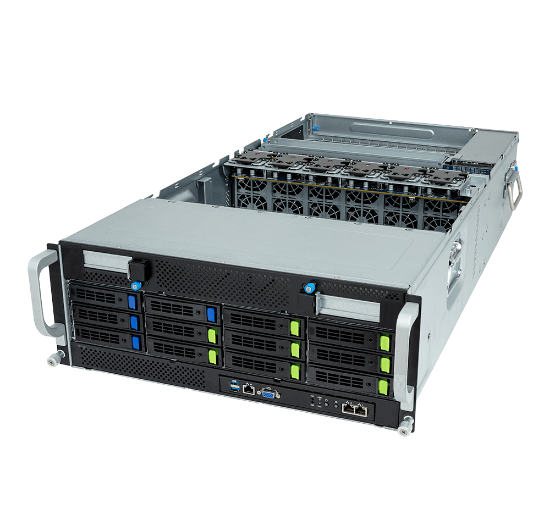
Real-Time AI Inference GPU inference server Architecture
Real-time AI inference—responding to queries with sub-10ms latency—is essential for applications including autonomous systems, real-time fraud detection, interactive voice response, and live video analytics. Achieving this latency at production scale requires careful optimization of model architecture, GPU configuration, serving infrastructure, and network topology.
Optimization Techniques
| Technique | Latency Reduction | Throughput Impact | Implementation Complexity |
|---|---|---|---|
| TensorRT Optimization | 2-5x | 1-2x increase | Moderate |
| INT8/FP8 Quantization | 1.5-3x | 2-4x increase | Low-Moderate |
| Dynamic Batching | Varies | 3-10x increase | Low (Triton) |
| CUDA Graph Capture | 1.2-2x | Same | Moderate |
| KV Cache Optimization | 1.5-3x (LLMs) | 2-3x increase | Moderate-High |
| GPU Memory Pooling | 1.1-1.5x | 1.5-3x increase | High |
GPU Selection for Low-Latency Inference
For sub-10ms latency targets, GPU selection depends on model characteristics. Small models (<7B parameters) achieve sub-10ms latency on L4 or L40S with TensorRT optimization. Medium models (7-13B) require L40S or H100. Large models (13-70B) require H100 or H200 with tensor parallelism and CUDA graph optimization. Multi-modal and video models require H100 or B200 clusters.
Architecture for Minimum Latency
For the lowest possible latency, inference servers should be co-located with application servers, preferably on the same local network or InfiniBand fabric. GPU direct RDMA skips CPU involvement in data transfer. Model sharding across GPUs with tensor parallelism minimizes per-GPU compute time but adds communication overhead—the optimal degree of parallelism depends on the specific model and latency target.
Related Content
Explore more about this topic:
- Best GPU Configuration for GPT-4 Fine-Tuning
- AI Infrastructure ROI Calculator
- AI Infrastructure TCO: Budgeting Guide
What is the minimum achievable latency for LLM inference?
With TensorRT optimization on H100, Llama 3 8B achieves 3-5ms first-token latency. Llama 3 70B achieves 15-30ms. B200 improves these figures by approximately 40%.
Can real-time inference run on consumer GPUs?
For development and low-throughput applications, yes. For production real-time inference at scale, data center GPUs (H100, L40S, B200) provide necessary memory capacity, reliability, and software ecosystem support.