
What is AI Inference Infrastructure? Serving Models in Pr…
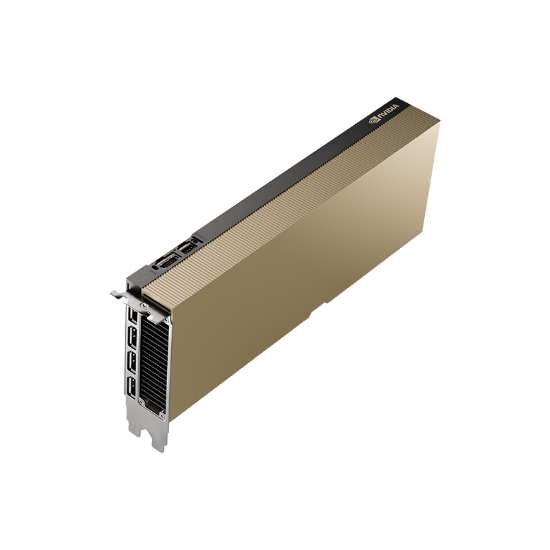
Quick Summary
- Purpose: Serve trained ML models to end users with minimal latency
- Key Components: Model servers, load balancers, auto-scaling, monitoring
- GPU Requirements: Lower memory bandwidth than training, more memory capacity
- Optimization: TensorRT, ONNX Runtime, vLLM for production inference
- Deployment: On-premise for latency-sensitive; hybrid for variable workloads
AI inference infrastructure GPU inference server—the systems that serve trained models in production—has become a critical focus area as organizations transition from model development to real-world deployment. Unlike training infrastructure, which optimizes for raw throughput on fixed-duration jobs, inference infrastructure must balance latency, throughput, cost, and reliability for continuous production operation. This comprehensive guide covers the architecture, hardware, software, and operational practices for production AI inference at scale.
Production Inference Architecture
Modern inference infrastructure follows a layered architecture designed for reliability, scalability, and operational efficiency. The architecture must handle variable request patterns, support multiple model versions, and provide consistent sub-second response times for interactive applications.
Model serving layer: The core inference engine, typically implemented using NVIDIA Triton Inference Server, vLLM, TensorRT-LLM, or custom serving frameworks. This layer handles model loading, batching, request routing, and response generation. For LLM inference, vLLM and TensorRT-LLM are the leading open-source solutions due to their superior PagedAttention and continuous batching implementations.
Request routing layer: Distributes inference requests across available GPU resources based on model type, priority, and current load. NGINX, Envoy, or custom routers provide request queuing, load balancing, and circuit breaking. Advanced routers incorporate model-aware routing that understands GPU memory capacity and inference latency characteristics.
Model registry: Centralized repository for model versions, configurations, and metadata. MLflow Model Registry, Hugging Face Hub, or custom solutions provide version control, approval workflows, and deployment automation. The registry ensures that the correct model version is deployed to the appropriate inference endpoints.
Monitoring and observability: Real-time tracking of inference latency (p50, p95, p99), throughput (requests per second), GPU utilization, memory consumption, and error rates. Prometheus for metrics collection, Grafana for visualization, and custom alerting for performance degradation detection.
GPU Selection for Inference Workloads
Inference GPU selection differs substantially from training GPU selection. While training benefits from maximum compute capability (FLOPs), inference optimization prioritizes memory capacity, memory bandwidth, and the availability of efficient quantization support.
| GPU | Memory | Inference Performance | Max Models (FP16) | Max Models (INT8) | Power | Best For |
|---|---|---|---|---|---|---|
| NVIDIA L4 | 24GB | 120 TFLOPS (FP8) | 1x 7B | 1x 13B | 72W | Edge, light inference |
| NVIDIA L40S | 48GB | 900+ TFLOPS (FP8) | 1x 13B | 1x 34B | 300W | General inference |
| NVIDIA A100 80GB | 80GB | 620 TFLOPS (FP8) | 1x 34B | 1x 70B | 400W | Legacy inference |
| NVIDIA H100 80GB | 80GB | 3,200 TFLOPS (FP8) | 1x 34B | 1x 70B | 700W | High-throughput inference |
| NVIDIA H200 141GB | 141GB | 3,200 TFLOPS (FP8) | 1x 70B | 1x 130B | 700W | Large model serving |
| AMD MI300X 192GB | 192GB | 650 TFLOPS (FP8) | 1x 70B | 1x 200B | 750W | Memory-intensive models |
Inference Optimization Techniques
Production inference deployments employ multiple optimization techniques to maximize throughput while meeting latency targets. The most impactful optimizations, in order of ROI, are:
1. Weight Quantization (2-8x improvement): Reducing model precision from FP16 to INT8 reduces memory requirements by 2x and increases throughput by 1.5-3x with minimal accuracy impact (0.1-0.5% perplexity increase). INT4 quantization provides 4x memory reduction with slightly higher accuracy degradation (0.5-2% perplexity increase). The NVIDIA TensorRT-LLM framework provides automated quantization workflows with calibration datasets.
2. Continuous Batching (3-10x improvement): Unlike traditional static batching (waiting for N requests before inference), continuous batching dynamically adds requests to in-progress inference batches as slots become available. For LLM inference, this improves GPU utilization from 30-50% to 70-90%, dramatically increasing throughput. vLLM pioneered this technique for transformer-based models.
3. KV-Cache Optimization (1.5-3x improvement): For autoregressive models, the key-value cache from prior tokens must be stored for each active sequence. PagedAttention (vLLM) manages KV-cache in non-contiguous memory blocks, eliminating fragmentation and enabling 2-4x more concurrent requests. Prefix caching further reduces compute by reusing KV-cache for shared prompt prefixes.
4. Speculative Decoding (1.5-2.5x improvement): Uses a smaller "draft" model to generate candidate tokens, which are then verified by the full model in parallel. This technique reduces inference latency for latency-sensitive applications by generating multiple tokens per model invocation.
Inference at Scale: Multi-GPU and Multi-Node Deployments
For models exceeding single-GPU memory capacity—Llama 3 70B (140GB FP16) or Llama 3 405B (810GB FP16)—multi-GPU inference with tensor parallelism is required. The model is split across GPUs, with each GPU responsible for a subset of attention heads or feed-forward layers.
Single-node inference (4-8 GPUs): Using 4x H100 GPUs with NVLink interconnect, Llama 3 70B achieves ~200-400 tokens/second with p95 latency under 200ms. This configuration is ideal for enterprise inference APIs requiring high throughput.
Multi-node inference (8-64 GPUs): For Llama 3 405B, 8x H100 GPUs with tensor parallelism provide ~50-100 tokens/second. Scaling to 16-32 GPUs with pipeline parallelism adds throughput linearly. InfiniBand interconnect is recommended for multi-node inference clusters.
Related Content
Explore more about this topic:
- NVIDIA H200 NVL Deep Dive
- What is NVLink? GPU Interconnect Guide
- How Tensor Cores Accelerate Deep Learning
What is the difference between online and batch inference infrastructure?
Online inference (real-time) requires p95 latency under 100-500ms and supports variable request rates. Batch inference processes large datasets with relaxed latency requirements (minutes to hours) but requires high throughput. Online inference optimizes for latency; batch inference optimizes for throughput. Most production environments require both, using separate infrastructure for each.
How do I estimate inference infrastructure costs?
Calculate: (tokens per request) x (requests per second) x (GPU-seconds per token) / (GPU utilization). At $3-5 per GPU-hour for H100 cloud instances, LLM inference costs range from $0.001-$0.01 per 1000 tokens depending on model size and optimization level.
What monitoring metrics are critical for inference infrastructure?
Critical metrics include: p50/p95/p99 inference latency, request throughput (RPS), GPU utilization (target 70-90%), GPU memory utilization, batch size distribution, error rate (target <0.1%), queue depth, and time-to-first-token (TTFT) for streaming inference.