
AMD Instinct MI300X: Architecture, Performance, and Deplo…
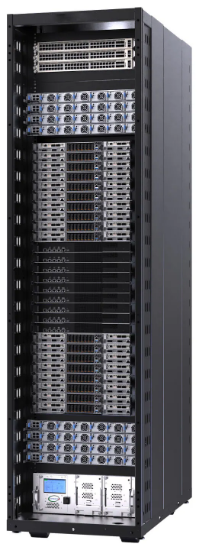
Quick Summary
- Memory: 192GB HBM3 per GPU, 2.4x more than H100
- Bandwidth: 5.3 TB/s memory bandwidth per GPU
- Architecture: CDNA 3 with matrix acceleration and Infinity Fabric
- Best For: Large model inference, memory-bound training workloads
- Software: ROCm 6.x with PyTorch, TensorFlow, and JAX support
AMD Instinct MI300X: Architecture Overview
The AMD Instinct MI300X accelerator, built on the CDNA 3 AMD MI300X GPU server architecture, represents AMD's most ambitious entry into the AI training and inference market. Unlike NVIDIA's monolithic GPU designs, the MI300X uses a chiplet architecture that combines 8 compute chiplets (XCDs) with 4 I/O chiplets (IODs) and 8 HBM3 memory stacks on a single package using AMD's Infinity Fan-out bridge technology. This design enables 192GB of HBM3 memory per accelerator—2.4x more than NVIDIA H100—with 5.3 TB/s of memory bandwidth.
The chiplet architecture provides manufacturing yield advantages and allows AMD to integrate specialized compute units for matrix operations, including the Matrix Core engine that provides 2,614 TFLOPS of FP16 compute and 5,229 TFLOPS of sparse FP16 performance. The MI300X contains 153 billion transistors and is manufactured on TSMC's 5nm and 6nm process nodes.
Memory Advantage for LLM Workloads
The MI300X's 192GB per GPU is its most compelling feature for LLM workloads. Llama 3 70B at FP16 requires ~140GB of memory, fitting entirely on a single MI300X GPU. This eliminates inter-GPU communication for inference and significantly reduces it for training. In contrast, the same model requires two H100 GPUs with NVLink, adding latency and system complexity. For large-scale deployments with hundreds of GPUs, this memory advantage translates directly to fewer servers, lower power consumption, and reduced data center footprint.
ROCm Software Ecosystem Maturity
AMD's ROCm (Radeon Open Compute) platform has matured significantly in the past two years. ROCm 6.x provides native support for PyTorch, TensorFlow, JAX, and ONNX Runtime—the major AI frameworks. AMD's HIP (Heterogeneous Interface for Portability) allows CUDA code to be ported to AMD GPUs with minimal changes, though some performance optimization is typically required for maximum throughput.
For government agencies requiring software supply chain transparency, ROCm's open-source nature is a significant advantage. The ability to audit GPU driver and library source code meets requirements of federal cybersecurity frameworks including NIST SP 800-53 and CMMC 2.0.
Government Deployment Considerations
AMD MI300X-based servers are available through NTS with TAA-compliant manufacturing and GSA Schedule pricing. For agencies evaluating AMD for AI workloads, NTS provides pre-deployment benchmark validation using government-specific AI models and datasets.
Related Content
Explore more about this topic:
Frequently Asked QuestionsIs MI300X suitable for all AI workloads?
MI300X excels at memory-bound workloads including large model inference and training. For compute-bound workloads with smaller models, H100's superior software optimization may provide better performance.
Does MI300X support confidential computing?
AMD provides confidential computing support through AMD Infinity Guard with secure encrypted virtualization and trusted execution environments suitable for government classified workloads.