May 14, 2026
FP8 vs FP16 vs BF16 vs FP32: Precision Formats for AI Tra…
Comparison of numerical precision formats for AI training: FP8, FP16, BF16, and FP32 for different workload types.
Read MoreComparison of numerical precision formats for AI training: FP8, FP16, BF16, and FP32 for different workload types.
Read MoreGuide to NVIDIA NVSwitch technology for connecting multiple GPUs in high-bandwidth fabric topologies.
Read MoreGuide to NVIDIA NVLink-C2C chip-to-chip interconnect for connecting CPU, GPU, and DPU in unified systems.
Read MoreComplete technical guide to GPU memory bandwidth technologies including HBM, GDDR, and LPDDR for AI workloads.
Read MoreComplete guide to NVIDIA CUDA parallel computing platform for GPU-accelerated applications.
Read MoreGuide to AMD ROCm open-source GPU computing platform for AI and HPC workloads.
Read MoreGuide to AI model quantization techniques for reducing model size and improving inference performance.
Read MoreDetailed comparison of NVIDIA B200 Blackwell and H100 Hopper GPU architectures for AI training and inference.
Read MoreCompare NVIDIA L40S and L4 GPUs for AI inference, rendering, and virtual workstation workloads.
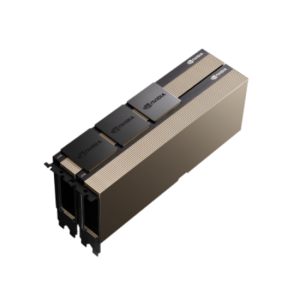
Read MoreIn-depth analysis of NVIDIA H200 NVL GPU with 141GB HBM3e memory for large language model training.
Read MoreExplore NVIDIA Grace Hopper superchip architecture combining ARM CPU and Hopper GPU for AI and HPC.
Read MoreTechnical guide to NVIDIA Tensor Core technology and how it accelerates AI training and inference.
Read MoreComplete comparison of GPU memory technologies: HBM3, GDDR7, and LPDDR5X for AI and graphics workloads.
Read MoreComprehensive technical guide to AMD Instinct MI300X accelerator for AI and HPC workloads.
Read MoreCompare AMD ROCm and NVIDIA CUDA software platforms for enterprise AI development and deployment.
Read MoreCompare Intel Xeon 6 and AMD EPYC 9005 processors for GPU server and AI infrastructure deployments.
Read MoreAnalysis of single-socket vs dual-socket server architectures for AI training and inference workloads.
Read MoreComplete guide to AI model parallelism techniques: data parallelism, tensor parallelism, and pipeline parallelism.
Read MoreReach out for expert guidance on pricing and procurement.