
NVIDIA Grace Hopper Superchip: Architecture for AI and HP…
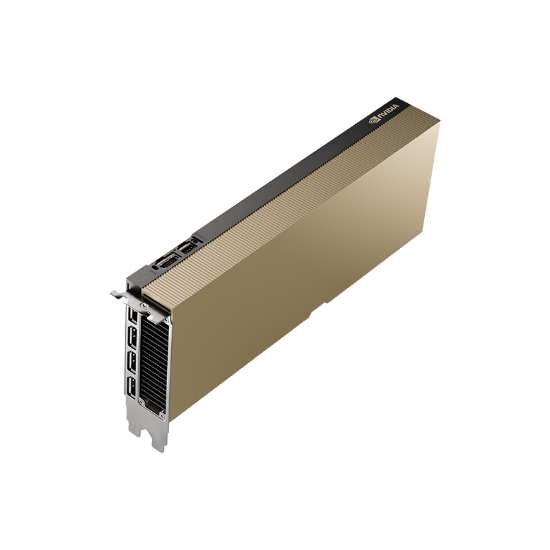
Quick Summary
- Architecture: ARM-based Grace CPU + Hopper GPU via NVLink-C2C
- Bandwidth: 900 GB/s CPU-GPU interconnect, 7x PCIe Gen5
- Memory: 624GB unified memory (480GB LPDDR5X + 144GB HBM3e)
- Best For: HPC-AI convergence, graph analytics, recommender systems
- Efficiency: 2x performance per watt vs x86 + H100 discrete systems
Grace Hopper: Redefining CPU-GPU Architecture
NVIDIA Grace Hopper represents a fundamental rethinking of the CPU-GPU relationship in accelerated computing. By combining an ARM-based Grace CPU with a Hopper GPU via NVLink-C2C interconnect, NVIDIA has created a unified memory architecture that eliminates the traditional bottleneck of PCIe-based CPU-GPU communication. This architecture is particularly impactful for AI workloads that require frequent CPU-GPU data exchange.
The GH200 Grace Hopper Superchip Grace Blackwell GB200 system integrates 72 ARM Neoverse V2 cores with a full Hopper H100 GPU (or H200 in the updated version) connected through NVLink-C2C providing 900 GB/s of bidirectional bandwidth—7x faster than PCIe Gen5. The unified memory pool of 624GB (480GB LPDDR5X + 144GB HBM3e) is accessible by both CPU and GPU without data copying.
| Feature | Traditional x86 + H100 | Grace Hopper GH200 |
|---|---|---|
| CPU-GPU Interconnect | PCIe Gen5 (128 GB/s) | NVLink-C2C (900 GB/s) |
| Total Memory | 80GB GPU + 512GB CPU | 624GB Unified |
| Memory Bandwidth | 3.35 TB/s (GPU only) | 4.8 TB/s (GPU) + 512 GB/s (CPU) |
| Form Factor | 2 boards + cables | Single module |
| Power Efficiency | 700W GPU + 350W CPU | 1000W total |
| Data Movement | Explicit copy via CUDA | Cache-coherent shared memory |
Workloads That Benefit Most
Grace Hopper excels in workloads that combine graph processing, recommendation systems, and AI inference—applications common in government intelligence analysis and enterprise decision systems. The unified memory eliminates the PCIe bottleneck for workloads with frequent CPU-GPU data exchange, such as:
Graph Neural Networks: GNN training requires repeated CPU-side graph sampling and GPU-side computation. Grace Hopper's unified memory enables 3-5x faster GNN training compared to traditional architectures by eliminating CPU-GPU data transfer overhead.
Recommender Systems: Large-scale recommendation models with embedding tables benefit from Grace Hopper's 624GB unified memory, which can hold entire embedding tables without PCIe swapping.
Database Acceleration: GPU-accelerated query processing and vector similarity search benefit from cache-coherent shared memory, enabling 4-8x faster query throughput compared to PCIe-based GPU database acceleration.
Government and Intelligence Applications
For intelligence community applications requiring analysis of large-scale graph data, social network analysis, and entity resolution, Grace Hopper's architecture offers unique advantages. The unified memory model simplifies programming for secure enclave applications where data movement between security domains must be minimized. NTS offers GH200-based systems configured for TS/SCI environments with appropriate security controls.
Related Content
Explore more about this topic:
- What is Model Quantization?
- FP8 vs FP16 vs BF16 vs FP32: Precision Formats
- Enterprise GPU Memory Hierarchy
Is Grace Hopper software-compatible with existing CUDA applications?
Yes, Grace Hopper runs standard CUDA applications. The ARM CPU requires recompilation of CPU code, but GPU code runs unchanged. NVIDIA provides the ARM HPC Compiler for CPU code compilation.
How does Grace Hopper compare to standard H100 for LLM training?
For pure LLM training where data movement is minimal (model weights stay on GPU), standard H100 in HGX configurations performs similarly. Grace Hopper's advantage appears in workloads with data-dependent CPU-GPU communication patterns.