
NVIDIA L40S vs L4 GPU: Choosing the Right Inference Accel…
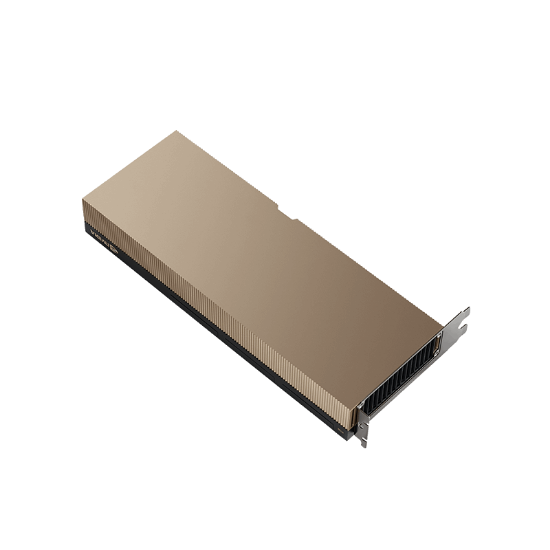
Quick Summary
- L40S: 48GB GDDR6, 933 GB/s bandwidth, Ada Lovelace architecture
- L4: 24GB GDDR6, 300 GB/s bandwidth, entry-level inference
- Best For L40S: Production inference, rendering, virtual workstations
- Best For L4: Lightweight serving, video transcoding, edge inference
- Price Point: L4 at ~$3K is ideal for high-volume inference farms
Positioning: Different GPUs for Different Inference Workloads
NVIDIA L40S and L4 represent two distinct tiers NVIDIA L40S in NVIDIA's data center GPU lineup, optimized for AI inference and graphics workloads rather than the massive parallel training that H100 and B200 target. Understanding the differences between these GPUs is essential for right-sizing inference infrastructure and optimizing cost per query for enterprise AI deployments.
The L40S, based on the Ada Lovelace architecture, is positioned as NVIDIA's most versatile data center GPU for inference, rendering, and virtual workstations. The L4, built on the same architecture, targets lighter inference workloads with an emphasis on density and power efficiency.
| Specification | NVIDIA L4 | NVIDIA L40S |
|---|---|---|
| GPU Memory | 24GB GDDR6 | 48GB GDDR6 |
| Memory Bandwidth | 300 GB/s | 864 GB/s |
| AI Performance (FP8) | 121 TFLOPS | 733 TFLOPS |
| Tensor Cores | 4th Gen | 4th Gen |
| Form Factor | Single-slot, low-profile | Dual-slot, full-height |
| TDP | 72W | 350W |
| Typical Config | 1-4 per server | 1-8 per server |
| Best Use Case | Lightweight serving, video AI | Production inference, rendering |
Inference Performance Analysis
For LLM inference, L40S delivers 6x more FP8 throughput than L4 (733 vs 121 TFLOPS), making it suitable for serving large models like Llama 3 70B with reasonable latency. L4 excels at serving smaller models NVIDIA L4 GPU (7B-13B parameters) and embedding generation, where its lower power consumption enables high-density deployments.
In practical terms, a single L40S can serve Llama 3 8B to approximately 500 concurrent users with sub-100ms latency, while an L4 serves about 100 concurrent users for the same model. For Llama 3 70B, L40S handles 50-100 concurrent users, while L4 is not recommended due to memory constraints.
Power Efficiency and Density
L4's 72W TDP enables passive cooling and deployment in dense 1U configurations with up to 4 GPUs per server. This makes L4 ideal for high-volume inference farms where power efficiency is paramount. L40S requires active cooling and is typically deployed in 2U or 4U servers with 2-8 GPUs.
For enterprise AI serving, the total cost per inference query favors L40S for larger models and L4 for high-volume, smaller model serving. The breakeven point is approximately 100M queries per month for a typical mixed workload.
Government Procurement Considerations
Both GPUs are available through GSA Schedule and SEWP V contracts. For federal agencies deploying AI inference at the edge or in classified environments, L4's lower power and cooling requirements enable deployment in SWaP-constrained settings. L40S is preferred for data center-based production inference serving where maximum throughput is required.
Related Content
Explore more about this topic:
- FP8 vs FP16 vs BF16 vs FP32: Precision Formats
- GPU Memory Bandwidth: Complete Guide
- What is Model Quantization?
Can L40S be used for training?
L40S can handle fine-tuning and small-model training but is not designed for large-scale training workloads. Its 48GB memory supports LoRA fine-tuning of models up to 30B parameters. For full training, H100 or B200 are recommended.
What is the typical deployment ratio of L4 to L40S?
Most enterprise inference deployments use a 3:1 or 4:1 ratio of L4 to L40S GPUs. L4 handles high-volume small-model inference, while L40S handles larger models and rendering workloads.
Does L40S support MIG partitioning?
No, MIG is exclusive to H100, H200, and A100 GPUs. L40S uses time-slicing for multi-tenant GPU sharing, which is adequate for inference workloads but provides less isolation than MIG.