
How NVIDIA Tensor Cores Accelerate Deep Learning: Technic…
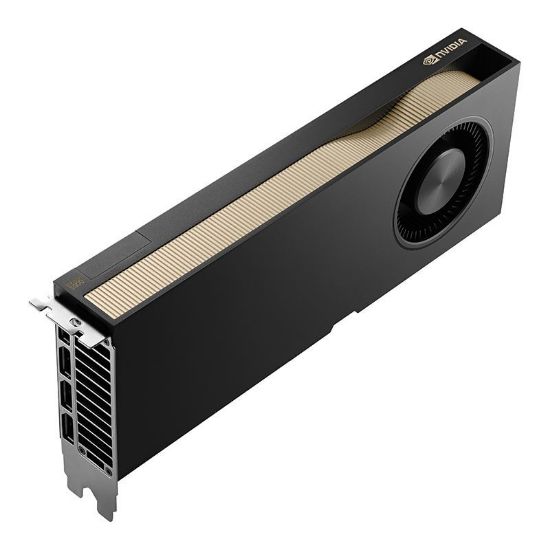
Quick Summary
- Technology: Specialized AI execution units within each GPU SM
- Generations: 4th Gen (Hopper) with FP8 Tensor Core support
- Speedup: 60x vs traditional CUDA cores for matrix operations
- Precision: FP64, TF32, FP32, FP16, BF16, FP8, INT8 support
- Impact: Enables practical training of models with 100B+ parameters
What Are Tensor Cores?
NVIDIA Tensor Cores are specialized programmable execution units integrated into NVIDIA GPU Streaming Multiprocessors (SMs) since the Volta architecture (2017). Unlike traditional CUDA cores that handle general-purpose parallel computation, Tensor Cores are purpose-built for the matrix multiply-accumulate operations that form the computational foundation of deep learning. A single Tensor Core can perform one 4x4 matrix multiply-accumulate operation per clock cycle, delivering 16x higher throughput than equivalent CUDA core implementations.
Generational Evolution of Tensor Cores
| Architecture | Generation | Precisions Supported | Peak TFLOPS (Sparsity) |
|---|---|---|---|
| Volta (V100) | 1st Gen | FP16 | 125 TFLOPS |
| Turing (T4, RTX) | 2nd Gen | FP16, INT8, INT4 | 260 TFLOPS |
| Ampere (A100) | 3rd Gen | FP16, BF16, TF32, INT8, INT4 | 624 TFLOPS (1,248 with sparsity) |
| Hopper (H100) | 4th Gen | FP8, FP16, BF16, TF32, INT8 | 3,958 TFLOPS (with sparsity) |
| Blackwell (B200) | 5th Gen | FP4, FP8, FP16, BF16, TF32 | 20 PetaFLOPS (FP4) |
How Tensor Cores Accelerate NVIDIA RTX PRO 6000 Blackwell AI
Neural network training and inference are dominated by matrix multiplication operations. A single layer in a transformer model performs millions of matrix multiplications per forward pass. Tensor Cores execute these operations in hardware at dramatically higher throughput than general-purpose CUDA cores. The key enabler is precision flexibility—by using lower numerical precision (FP16, BF16, FP8, or INT8) for computation, Tensor Cores achieve higher throughput while maintaining model accuracy through careful mixed-precision training techniques.
Mixed-precision training, pioneered by NVIDIA and implemented in PyTorch's AMP (Automatic Mixed Precision) and TensorFlow's mixed precision API, uses FP32 for master weights and FP16/BF16 for forward and backward passes. This approach delivers 2-3x training speedup on Tensor Cores with no loss in model accuracy. The Transformer Engine introduced with Hopper automates precision selection at each layer, dynamically choosing between FP8 and FP16 based on activation statistics.
Impact on Enterprise AI Infrastructure
The evolution of Tensor Cores directly influences GPU server selection for enterprise and government AI deployments. Each generation enables larger models to be trained in less time, reducing total cost of ownership for AI infrastructure. H100's 4th Gen Tensor Cores with FP8 support make training of 100B+ parameter models practical on single-server configurations that required multi-cluster setups with A100.
Related Content
Explore more about this topic:
- FP8 vs FP16 vs BF16 vs FP32: Precision Formats
- GPU Memory Bandwidth: Complete Guide
- What is Model Quantization?
Do all NVIDIA GPUs have Tensor Cores?
No. Tensor Cores are available on data center GPUs (H100, A100, L40S, L4) and professional workstation GPUs (RTX series). Consumer gaming GPUs have Tensor Cores but with different performance characteristics.
Can I use Tensor Cores for non-AI workloads?
Yes, any workload using matrix operations can benefit from Tensor Cores. Scientific computing applications in HPC, signal processing, and linear algebra can leverage Tensor Cores through cuBLAS and other optimized libraries.
Do Tensor Cores require special programming?
For most use cases, Tensor Cores are used automatically through optimized libraries like cuDNN, cuBLAS, and TensorRT. Direct Tensor Core programming is available through CUDA's WMMA API for custom workloads.