
AMD ROCm vs NVIDIA CUDA: Platform Comparison for Enterpri…
Quick Summary
- CUDA: Mature ecosystem, 15+ years, extensive library support
- ROCm: Open-source, growing rapidly, HIP compatibility layer
- Performance: CUDA still leads in most AI benchmarks by 5-15%
- Portability: HIP allows single-source code for AMD and NVIDIA
- Government: ROCm open-source nature preferred for auditability
Platform Comparison Overview
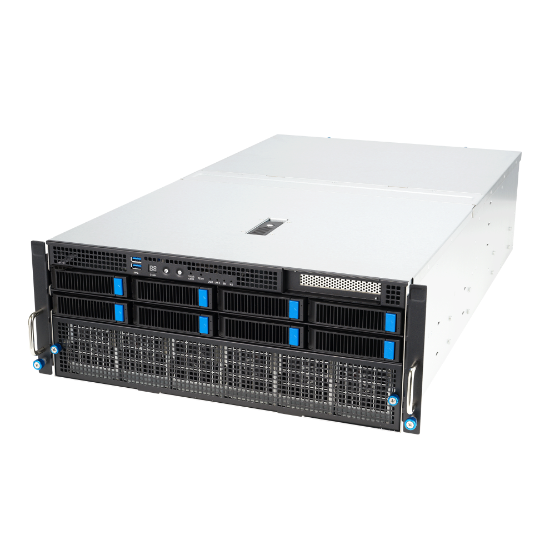
The choice between AMD ROCm and NVIDIA CUDA software platforms AMD MI300X server with ROCm is one of the most consequential decisions in AI infrastructure architecture. Both platforms provide the foundational software stack for GPU-accelerated computing, but they differ significantly in maturity, performance optimization, ecosystem breadth, licensing, and development experience. This comparison provides an objective analysis to inform enterprise and government procurement decisions.
| Feature | NVIDIA CUDA | AMD ROCm |
|---|---|---|
| Initial Release | 2007 (17+ years) | 2016 (8+ years) |
| License | Proprietary, EULA-based | Open source (MIT, Apache 2.0) |
| AI Libraries | cuDNN, cuBLAS, TensorRT, NCCL, Triton | MIOpen, rocBLAS, RCCL, MIGraphX |
| Framework Support | PyTorch, TF, JAX, ONNX (native) | PyTorch, TF, JAX, ONNX (ROCm builds) |
| Compiler | NVCC (LLVM-based) | ROCm compiler (LLVM/Clang) |
| Debugging Tools | Nsight, CUDA-GDB, Compute Sanitizer | ROCgdb, rocprofiler, roctracer |
| Container Support | NVIDIA Container Toolkit | ROCm Docker images |
| Source Auditability | Binary-only drivers, some open-source libraries | Fully open-source stack |
Performance Comparison
NVIDIA CUDA maintains a 5-15% performance advantage across most AI benchmarks due to 17 years of compiler optimization, library tuning, and framework integration. cuDNN, NVIDIA's deep learning primitive library, is hand-tuned for each GPU architecture and provides significant performance advantages for convolution, normalization, and activation operations. AMD's MIOpen has closed much of this gap but still trails in peak performance for specific operations.
However, the performance gap narrows for inference workloads, particularly for large models where memory capacity—MI300X's strength—becomes the dominant factor. In memory-bound scenarios, MI300X with ROCm can match or exceed H100 with CUDA by enabling larger batch sizes and reducing communication overhead.
Government and Enterprise Considerations
For federal agencies, the open-source nature of ROCm provides software supply chain transparency that CUDA cannot match. This is particularly relevant for CMMC 2.0 compliance, where controlled unclassified information (CUI) processing requires verifiable software security. However, CUDA's broader ecosystem means faster availability of security patches and a larger pool of trained developers.
Related Content
Explore more about this topic:
- What is Model Quantization?
- Enterprise GPU Memory Hierarchy
- FP8 vs FP16 vs BF16 vs FP32: Precision Formats
Can I run CUDA code on AMD GPUs?
HIP (Heterogeneous Interface for Portability) provides a CUDA-like API that runs on both AMD and NVIDIA GPUs. Many CUDA applications can be ported with minimal changes, but performance tuning is typically required for optimal throughput on AMD hardware.
Which platform has better government certifications?
CUDA has longer track record with FIPS 140-3 validation and Common Criteria certification. ROCm is actively pursuing certifications and the open-source nature enables independent validation. NTS supports both platforms for federal deployments.